


Millions of people could benefit from a universal plug-in AI tool created by a Nottingham Trent University (NTU) student who was inspired to help other people, like him, who have dyslexia.
Angelus Collins, 23, created Lexo to support users with a range of tasks – from reading text aloud to converting their speech into writing – and already uses the technology to support himself with his studies.
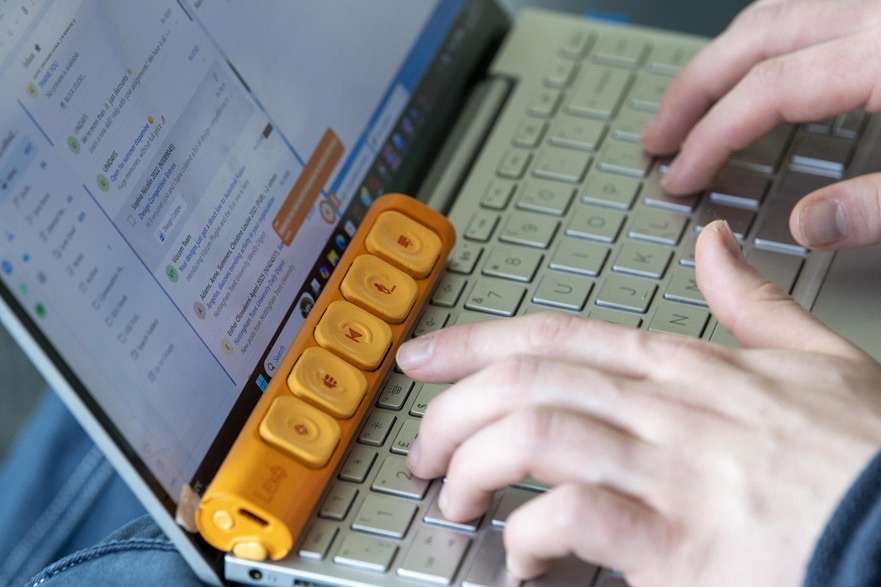
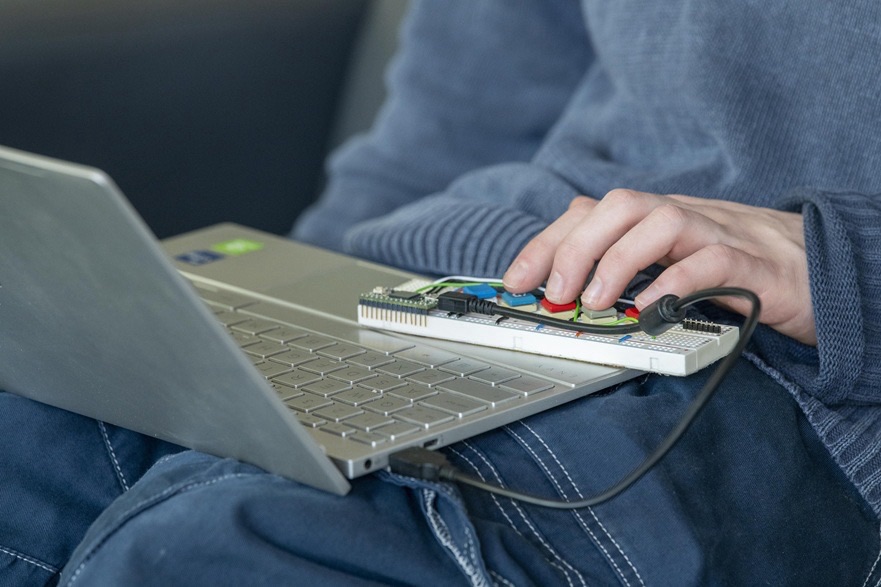
The BSc Product Design undergraduate’s working prototype – which features five buttons for simple access to each function – can be plugged into any personal computer and used on any software package, saving people the need to use multiple tools to perform the same task.
His design will go on public display later this month for the university’s annual art and design Student Showcase, which exhibits the creative works of more than 1,300 students.
“I’m very dyslexic, and English has always been really hard for me,” said Angelus, who is originally from Street in Somerset. “I like making things that make our lives easier.
“When I struggle with reading and writing, this device allows me to simplify things. It’s helped me focus more on my creative ability instead of getting stuck.”
Lexo – which can operate in 30 different languages – allows users to highlight text anywhere on their screen and hear it read aloud, making it quicker and easier for people to understand what’s written.
The technology includes dictation, allowing spoken words to appear directly on the screen which removes the need for typing.
The dictation feature has AI‑powered tools that can correct grammar, adjust tone, summarise information and act as a dictionary.
For people who have visual stress, Lexo offers multiple coloured overlays to make reading easier for them.
It provides adjustable text sizes to make fonts more visible, and has guided reading features that follow lines of text on screen.
Angelus built both the hardware and software himself and is now working on refining the system, with plans to pursue a patent.
“My journey of programming tools to support myself began during my A-Levels, and then I started the development of Lexo during my degree,” said Angelus, who uses Lexo daily, particularly for reading emails or writing coursework.
“I developed my coding skills further during my placement year as a game developer, all which has helped lead to my working prototype.
“While the tool was inspired by my dyslexia, it has a much wider appeal and early feedback has come from users with and without learning difficulties.
“Everyone likes something different. Some like the AI correcting their text, others like the dictation or the reading.
“It can also have huge benefits for people who struggle with reading on screen or dexterity issues with typing.
“There are so many people who could benefit, not just people with dyslexia.”
Angelus’s design is on show until 5 June at the university’s Newton building, City Campus.
Dr Joseph Stewart, Senior Lecturer in Product Design at NTU, who oversaw the project, said: “Angelus has taken his personal experience with dyslexia and turned it into a product that could benefit millions of people.
“His concept demonstrates how inclusive design thinking can help create technologies that remove barriers to learning and create efficiencies with day-to-day tasks.
“His working prototype already supports him in his studies, and user feedback shows that the technology could also benefit people without learning difficulties.”

