
- Despite an eco-conscious label, Gen Z still fly more frequently when travelling for work over other transport methods (62%)
- Cars are the second most used transport method (59%) for work trips by Gen Z, followed by buses (33%)
- From mini bars in aeroplanes to mood-lit cars, AI has generated imagery highlighting the “future” of business travel based on Gen Z’s wishlist
Fold out beds, cooking spaces, and beauticians are just some of the features Gen Z would introduce to transport options for work in the future, according to a new study by TravelPerk, the global business travel management platform.
The data shows the top methods of transport for domestic and international business trips for 18-26-year-olds and reveals the innovative features they’d like to see in the years to come.
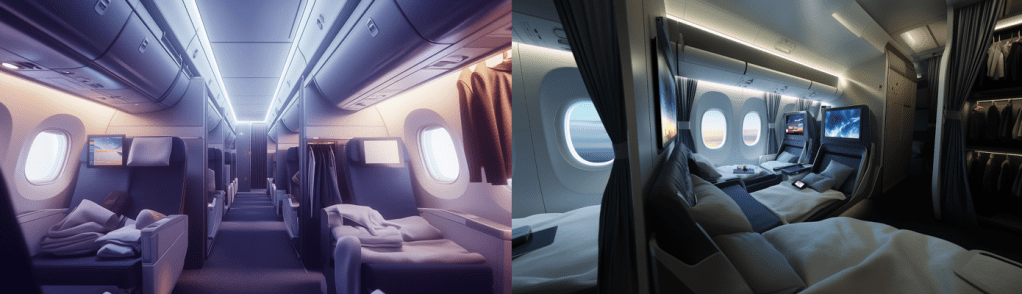
The sky’s the limit for 62% of Gen Z, who rank travel by air as their top preference. It’s also safe to say they hope to travel in style, as over a third (34%) rank fold-out beds in all cabin classes as the most desired feature when asked what their ideal future aircraft could include.
Luxury is also a priority, with nearly a third (32%) dreaming of a mini bar filled with drinks of choice as their second most wanted amenity, followed by built-in seat TV screens and even biometric tickets (tied, 29% each) which use fingerprint, voice or facial recognition and settle fears over forgotten passports and tickets.
To make working on the go easier, Gen Z would also appreciate free Wi-Fi (27%) and seats equipped with built-in digital communications such as phones or laptops (25%), highlighting their preference for a seamless experience which enables them to do more than ever, such as making calls in-flight – which is currently banned.
When prompted, AI tool, Midjourney, predicts what future aircrafts might look like based on Gen Z’s desired features:
Cars that can cook meals
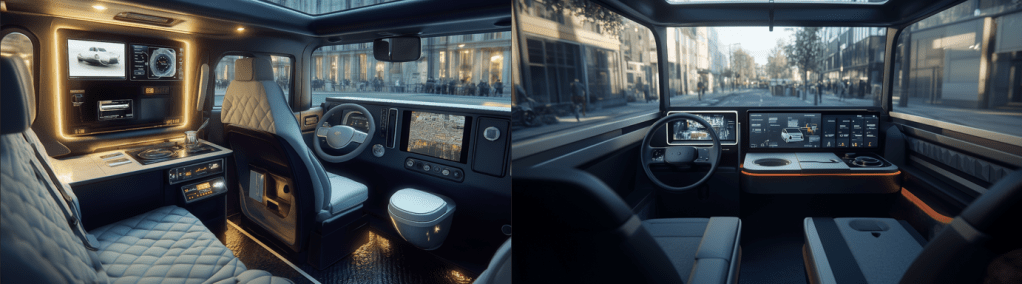
Elsewhere, over half of Gen Z workers (59%) rank cars as the second most used mode of transport for business travel, but they want their car journeys to feel more homely. Though cars would need supersizing, having some space to cook and eat would be valued, with fold-out tables (31%) and a cooking area to make gourmet meals (30%) as well as a secret toilet under a seat (27%).
Incorporating advanced technology into cars is also key. Two in 10 (20%) want mood lighting and 17% want biometric access, including keyless entry through fingerprints, voice and facial recognition as part of their vehicles.
Over one in 10 (15%) also desire holographic infotainment systems – innovative displays that project speed, petrol levels and weather updates. While all these features might be considered more of a luxury than a necessity for business use, they reflect a growing demand for this tech-savvy generation.
A further fifth (20%) of Gen Z also hope to one day use fully electric cars that cover any distance in one charge – whether it’s from London to Leeds, or Manhattan to Washington DC.
AI tool Midjourney predicts what a future car could look like when used for business travel:
Beauty buses and café coaches
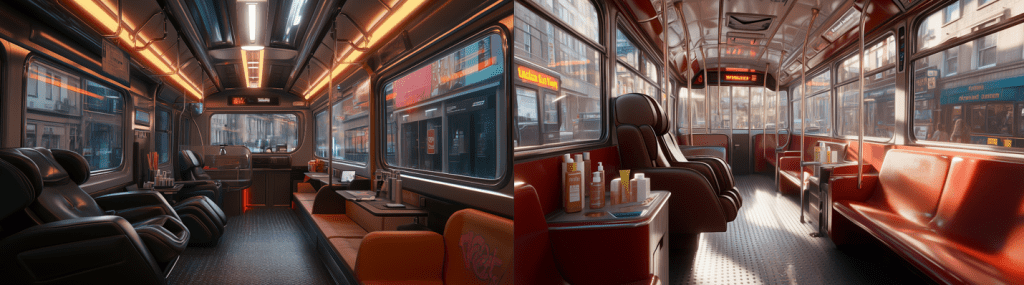
Buses and coaches were ranked third most popular for business travel, according to a third of 18-26-year-olds (33%), however, it appears those who do use one are seeking spa-like treatments whilst travelling for work. Massage chairs (15%), beauticians on board (14%), free skincare (11%) and windows that can change scenery upon command (11%) are the unique features younger workers want to see.
They also hope to replenish energy with some food along the way as over two in 10 (21%) would like to see onboard cafés, as well as a food pantry (16%) and vending machines (13%) stocked up with goodies to snack on ahead of important business meetings.
AI tool Midjourney predicts what a future bus or coach could look like when used for business travel:
Additional key findings:
Top Business Travel Methods for UK Workers (Across All Age Demographics):
- Car – 63%
- Airplane – 61%
- Train – 39%
- Bus/Coach – 27%
- Boat/Ferry/Ship – 11%
- Bicycle – 11%
Reasons for Choosing Specific Modes of Transport (General Population):
- Airplanes:
- Preferred for being the quickest way to travel (32%)
- Bus:
- Chosen for being more financially friendly (30%)
- Cars:
- Preferred for comfort (30%)
- Chosen for flexible timing (27%)
- Considered more reliable (18%)
- Trains:
- Ranked highest for sustainability (28%)
- Considered the safest option (19%)
FAQs
Certainly! Here are responses to the three questions:
- Why do Gen Z prefer flying for business travel despite their eco-conscious reputation? Gen Z’s preference for air travel, despite their eco-conscious reputation, can be attributed to several factors. Firstly, air travel is often the quickest and most efficient way to cover long distances, making it appealing for business purposes where time is a critical factor. Additionally, the convenience and comfort of flying—such as the availability of in-flight services, the ability to work during the flight, and the direct routes—make it a preferred choice. While Gen Z may be eco-conscious, they also value practicality and efficiency, especially in professional settings, leading them to prioritize air travel for work despite the environmental impact.
- How feasible are the innovative features Gen Z wants in future transport options? Many of the features Gen Z desires in future transport options, like fold-out beds, mini bars, and cooking spaces, are technically feasible but would require significant changes in design and infrastructure. Airlines and car manufacturers are continually innovating to enhance comfort and convenience, but integrating such luxury features would likely increase costs and might be reserved for premium services. Furthermore, regulatory and safety considerations would play a major role in determining which features could be realistically implemented. While some aspects, like biometric tickets or mood lighting, are already in development or use, more extravagant ideas, such as onboard beauticians or holographic infotainment systems, might take longer to become mainstream and could remain niche offerings.
- What are the environmental implications of Gen Z’s travel preferences, and how do they reconcile these with their sustainability values? The environmental implications of Gen Z’s preference for air travel and other high-comfort, energy-intensive transport methods are significant, as air travel is one of the largest contributors to carbon emissions in the transportation sector. However, Gen Z’s desire for sustainability could drive innovation in the industry, pushing for more eco-friendly technologies like electric planes, carbon offset programs, or greener fuel alternatives. This generation might reconcile their travel choices with their sustainability values by supporting or advocating for such advancements, choosing airlines that prioritize environmental responsibility, or balancing frequent travel with other sustainable practices in their personal and professional lives. The trend toward luxury and convenience in travel may also lead to a push for luxury that is not just comfortable but also sustainable.
 The convergence of tech and brands